
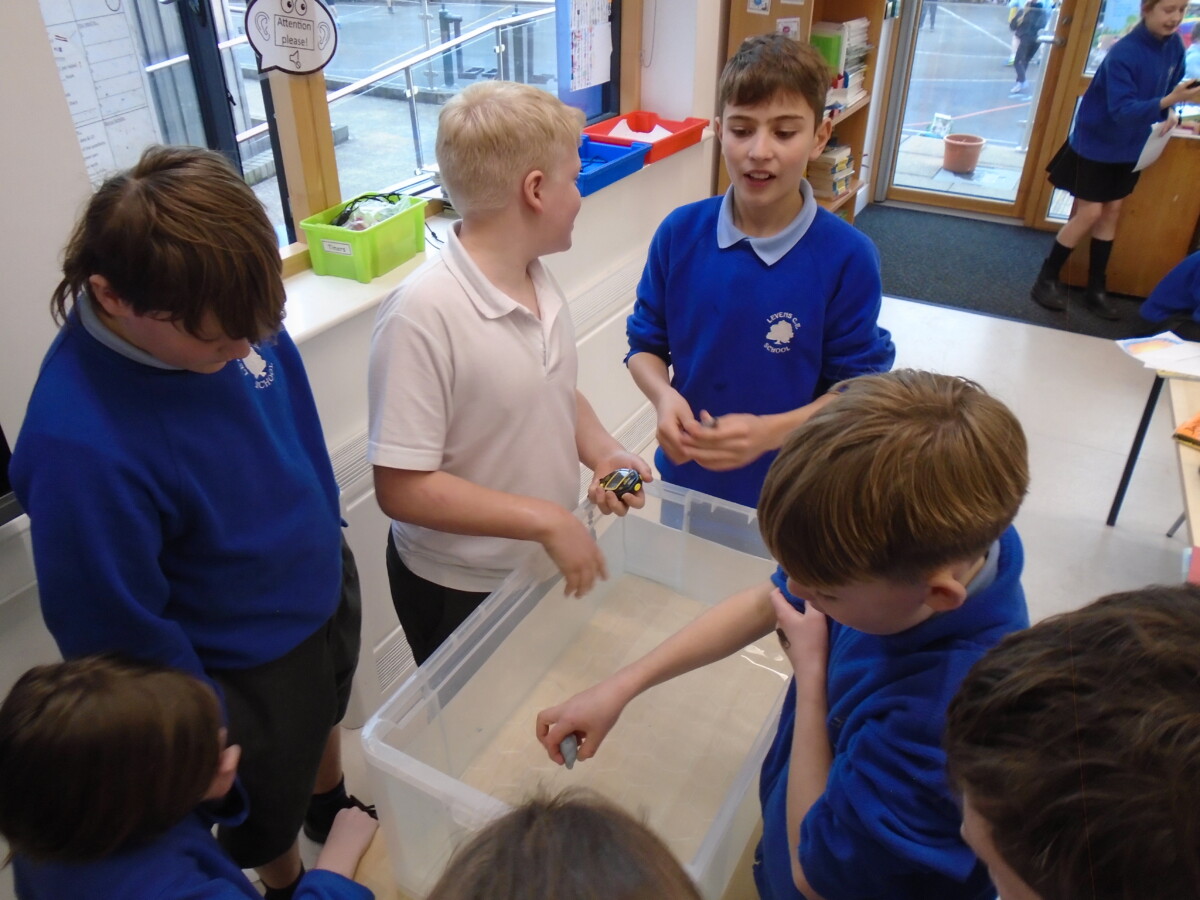
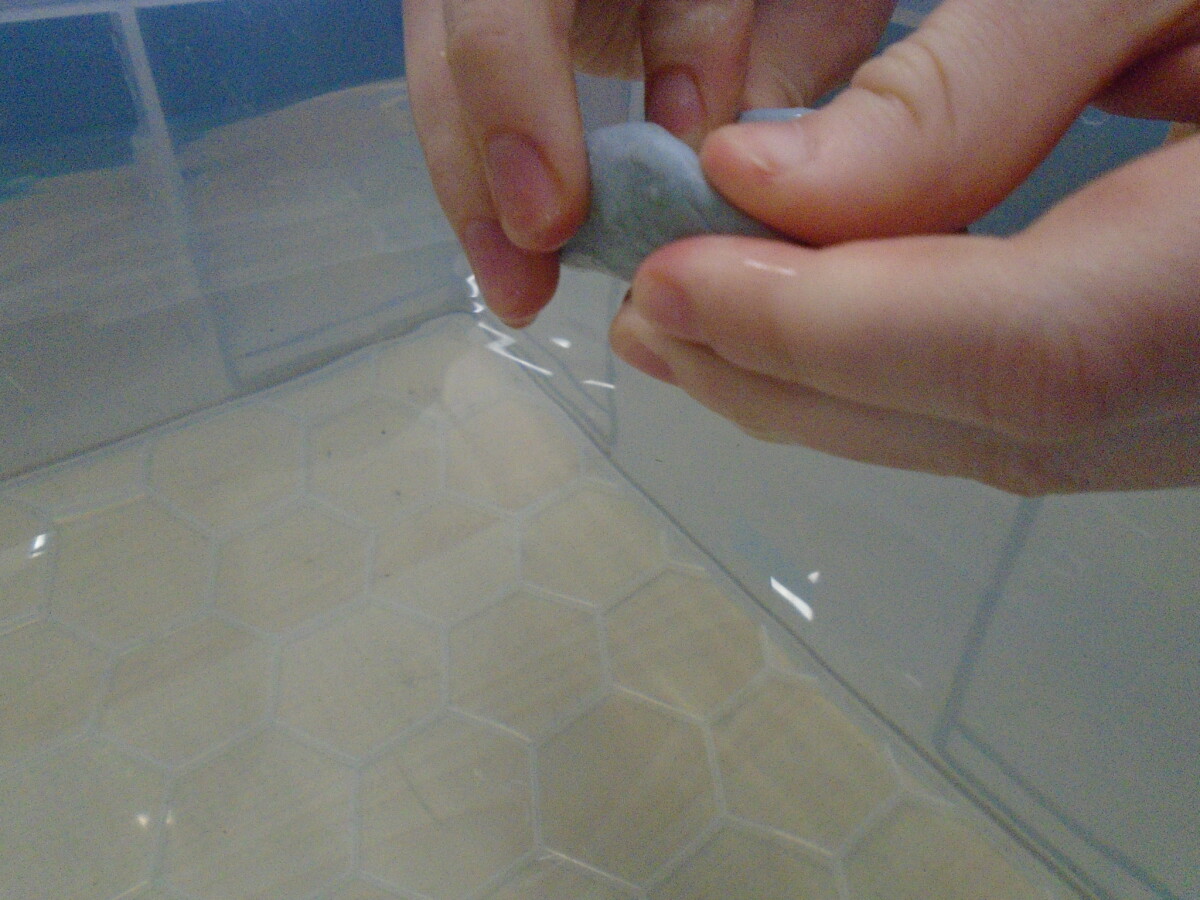
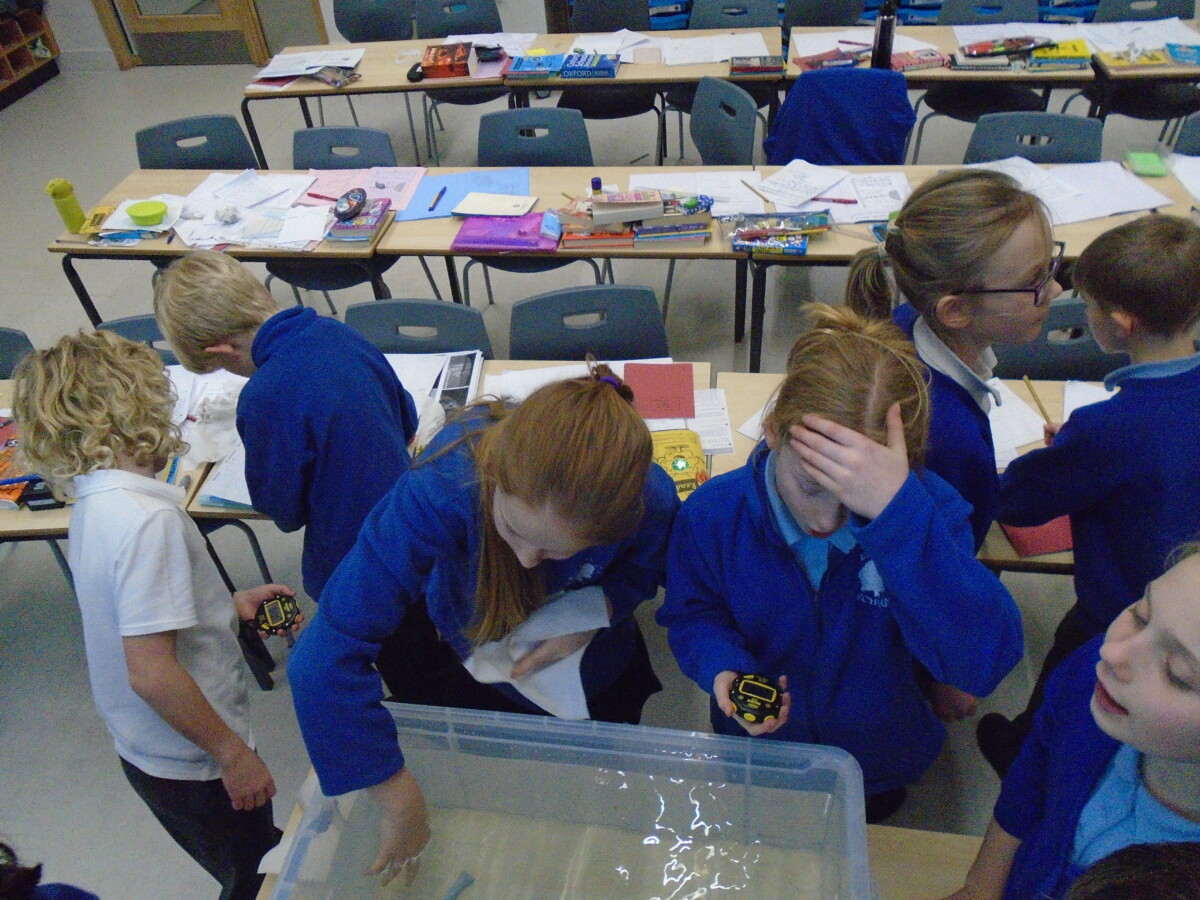
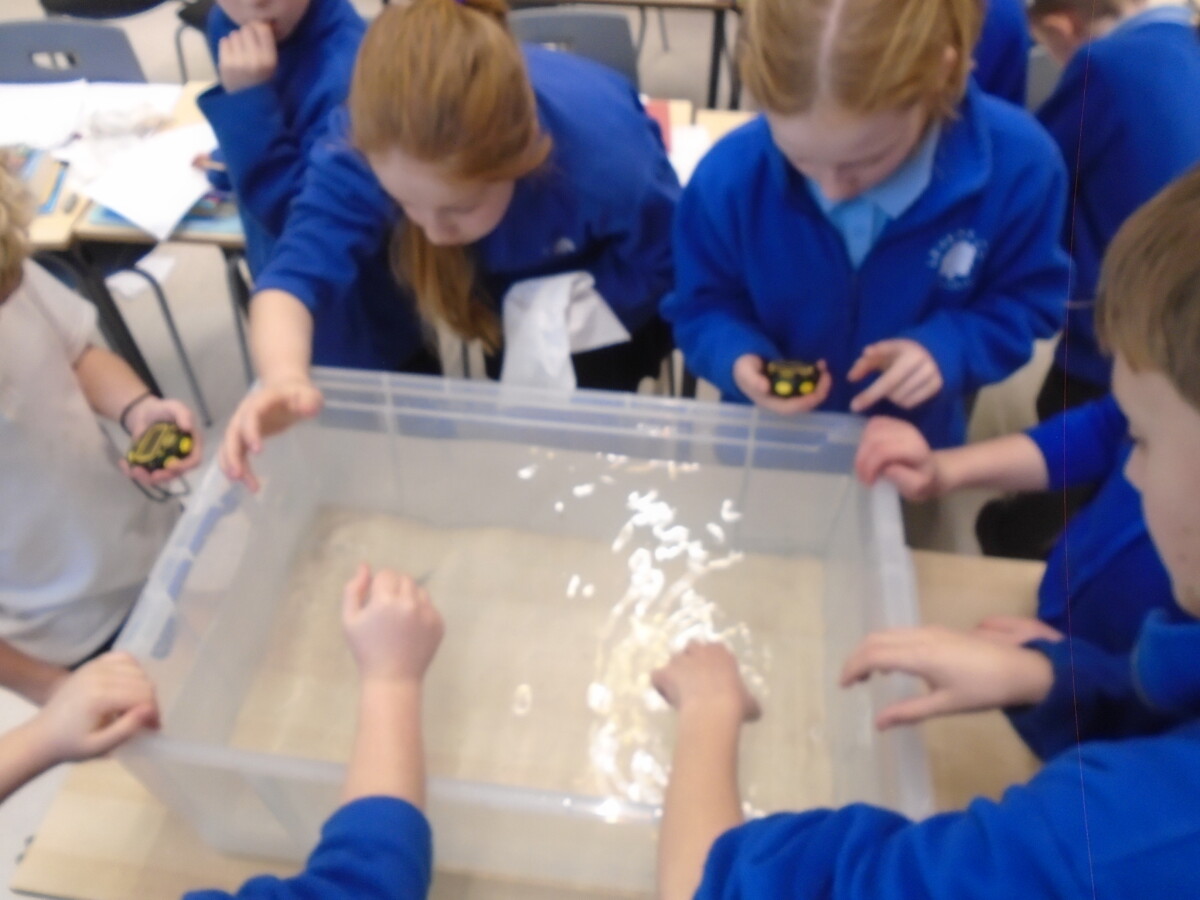
In science, our Year 5 and 6 pupils got hands-on (and a little wet!) in our investigation into water resistance. The classroom was transformed into a mini research lab as students explored how different shapes move through water and how streamlined designs can affect speed.
Before any clay touched the water, the children discussed the idea of a fair test. Together, they identified the variables that needed to stay the same throughout the experiment, such as:
- The amount of modelling clay used (by weight)
- The height from which the shape was dropped
- The depth and temperature of the water
- The type of container
The only variable they changed each time was the shape of the clay. This careful planning ensured that any difference in results was due to water resistance alone.
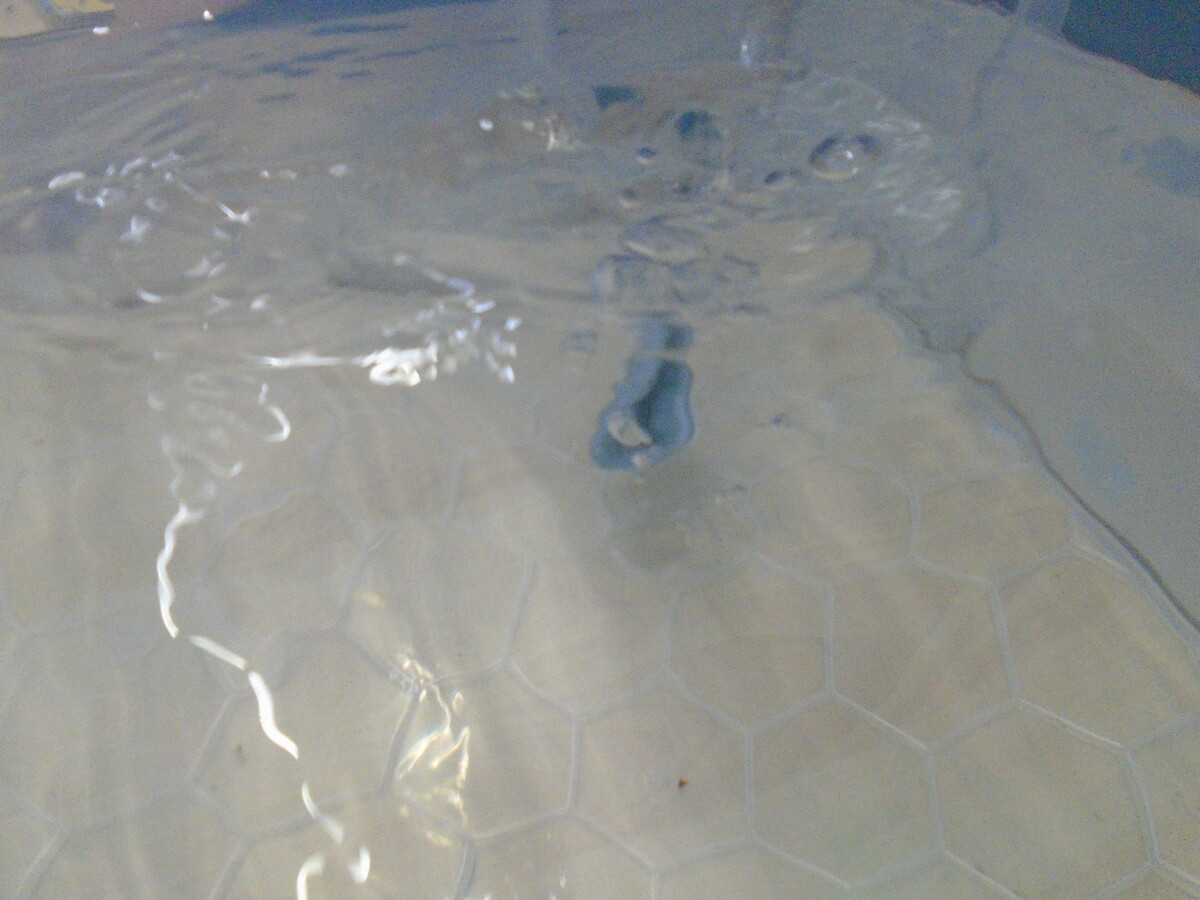
Each clay shape was dropped into a tall tank of water three times, and pupils recorded each time carefully using a stopwatch. By calculating the average time, they were able to produce more reliable results and spot inconsistencies.
As with all good science experiments, not everything went perfectly smoothly—some pieces of data stood out as obvious anomalies. Pupils discussed possible reasons for this: Was the shape released accidentally at an angle? Did an air bubble get trapped? Was the timer started a fraction too late? These conversations helped pupils think critically about how scientific data is collected and why accuracy matters.
One of the most interesting moments came from a shape everyone assumed would fall slowly: a large, flat clay design. Instead of drifting gently downward, it tipped onto its side and shot straight to the bottom of the tank. This surprising outcome sparked lots of discussion about the meaning behind the data we had gathered, and how we need to think critically about this.